Decode the mode
Bit masks separate owner, group and others. Strict validation rejects unsupported syntax rather than guessing.
Day 077 / Security / Unix Modes
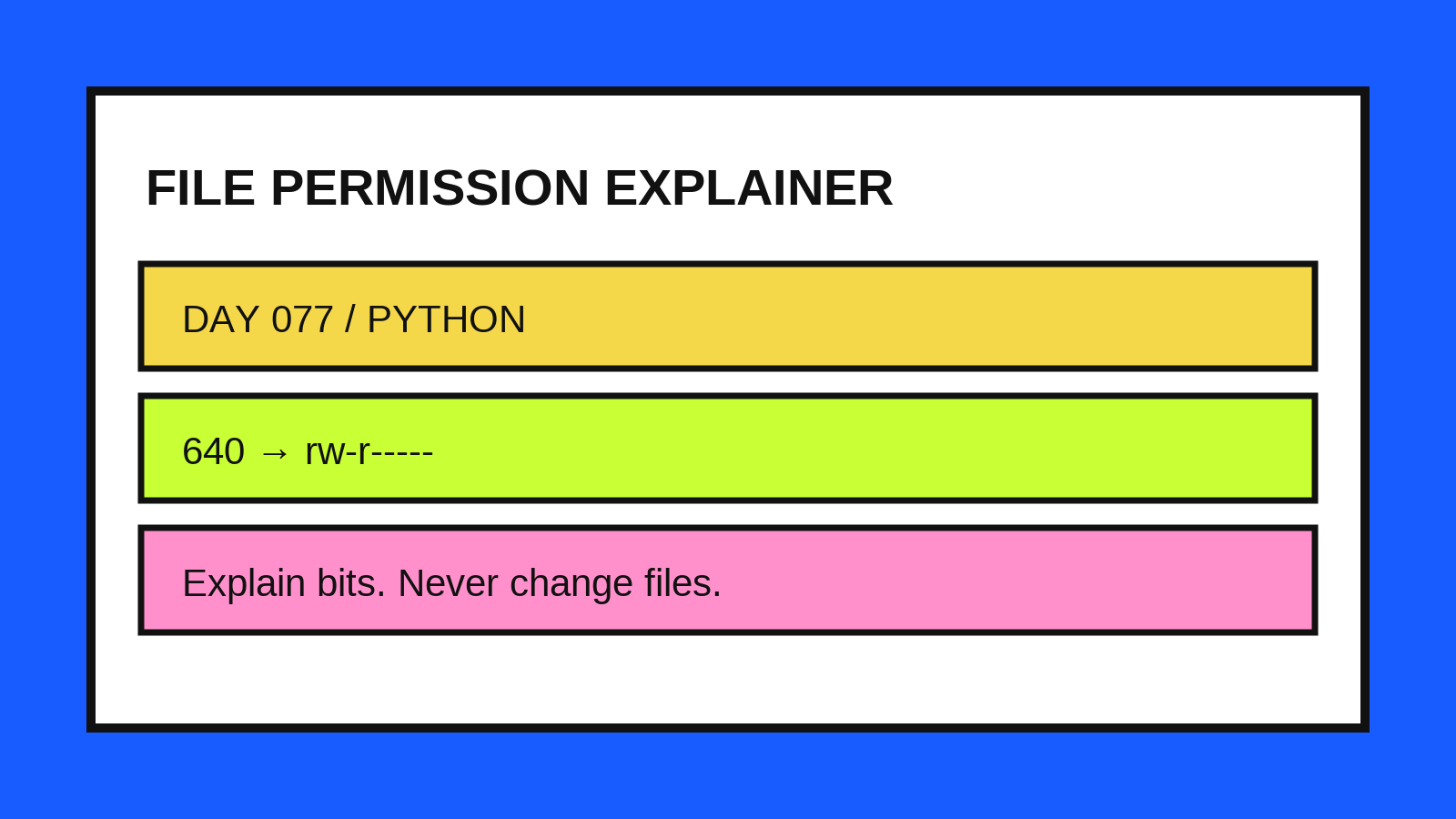
Translate numeric Unix permissions into symbolic bits and file or directory explanations with a local Python CLI.
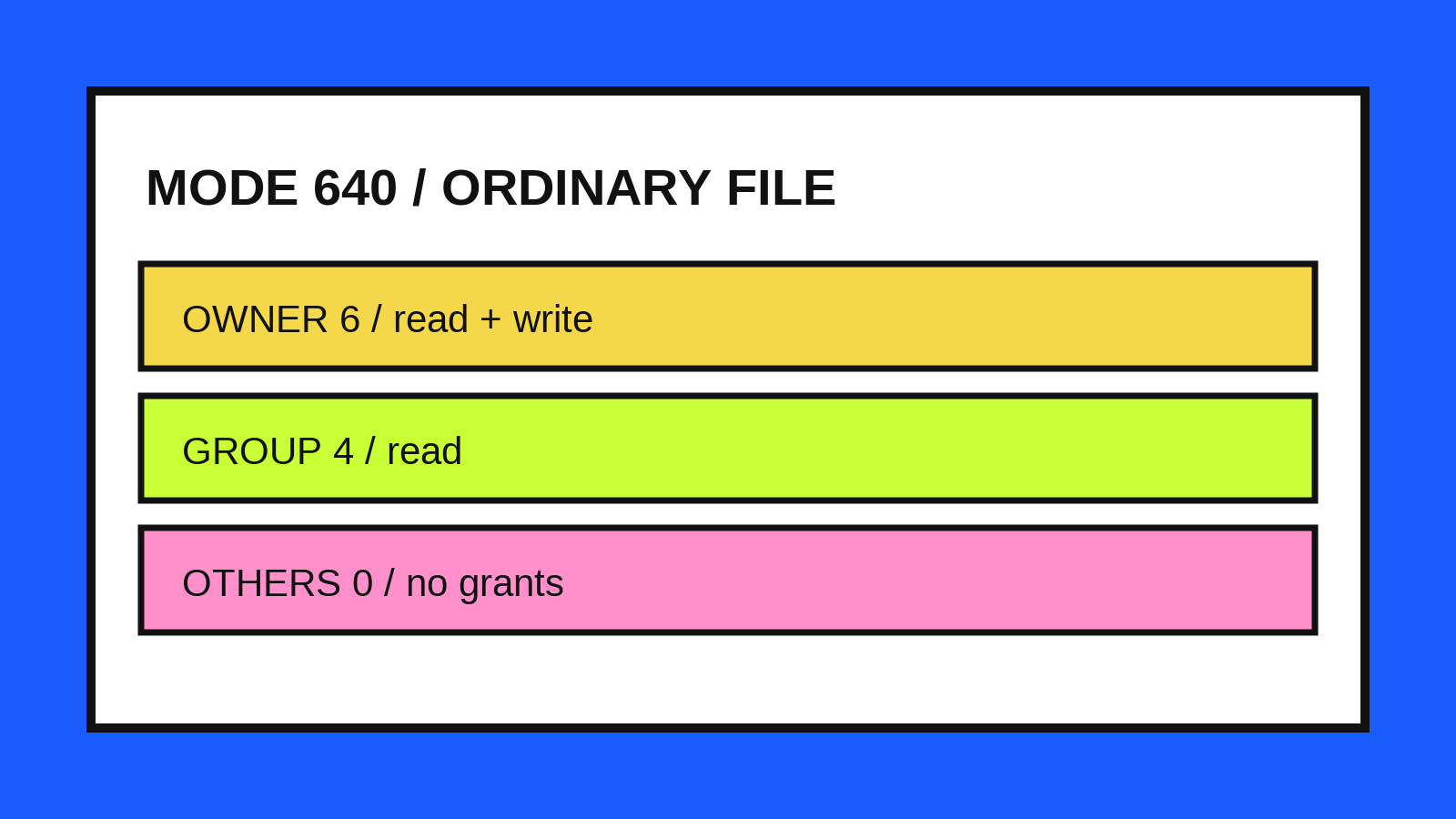
Bit masks separate owner, group and others. Strict validation rejects unsupported syntax rather than guessing.
Directory read lists names; execute means search/traversal. Notes distinguish sticky-directory behavior from modifying file contents.
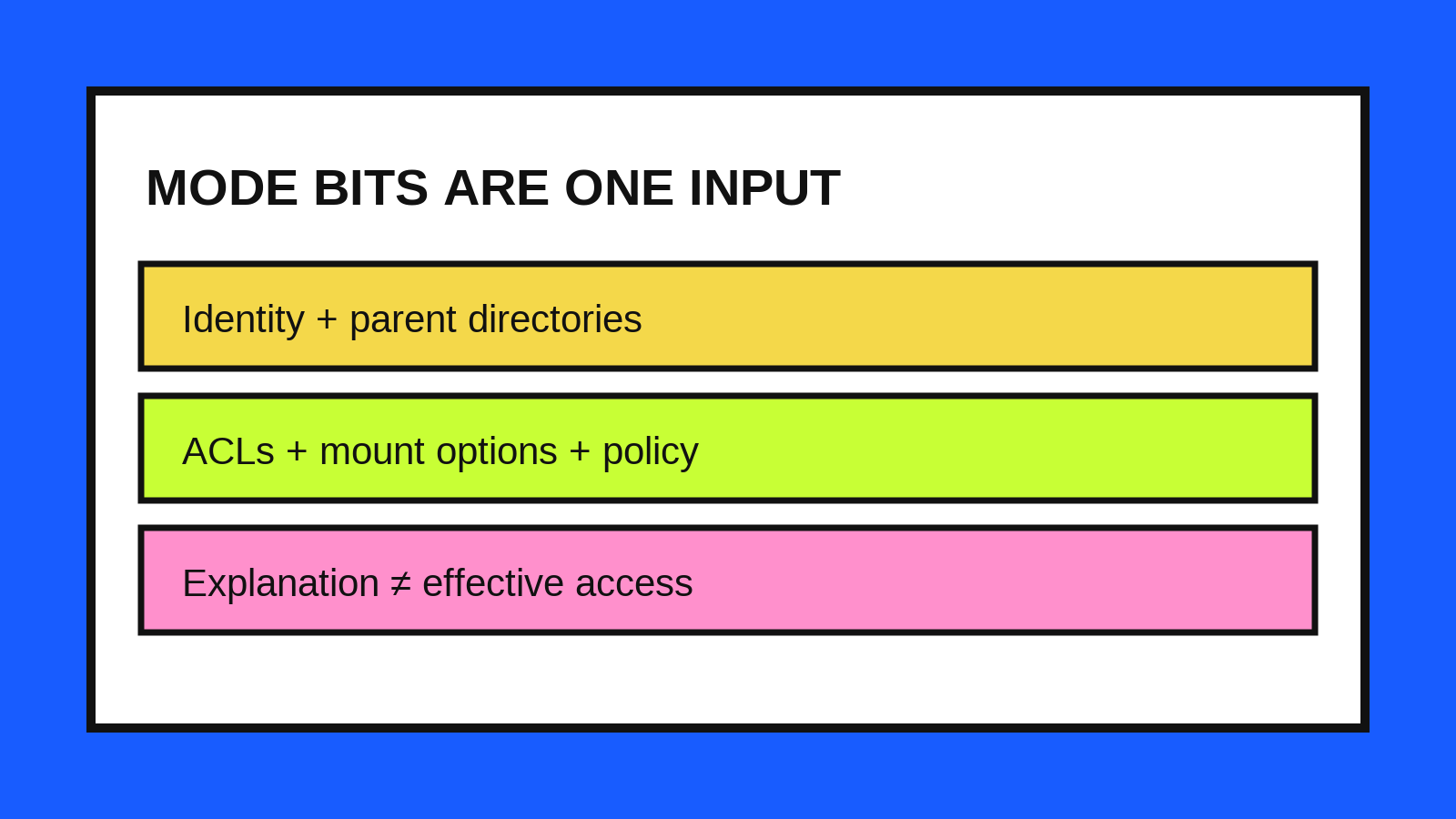
Setuid, setgid and sticky notation includes uppercase markers when execute is absent. Output is educational, not a recommendation or effective-access verdict.
Seven passing tests
All 4,096 modes compared with Python stat
File and directory explanations
No filesystem mutation
Standard library only
Argparse and JSON provide deterministic local reports and explicit invalid-input exit codes.
Seven tests cover all octal modes against stat.filemode, grants, directory meanings, special bits, rejected inputs, warnings and CLI output.