Day 072 / Security / HTTP Headers

Security Header Explorer

View source ↗Scroll to explore ↓
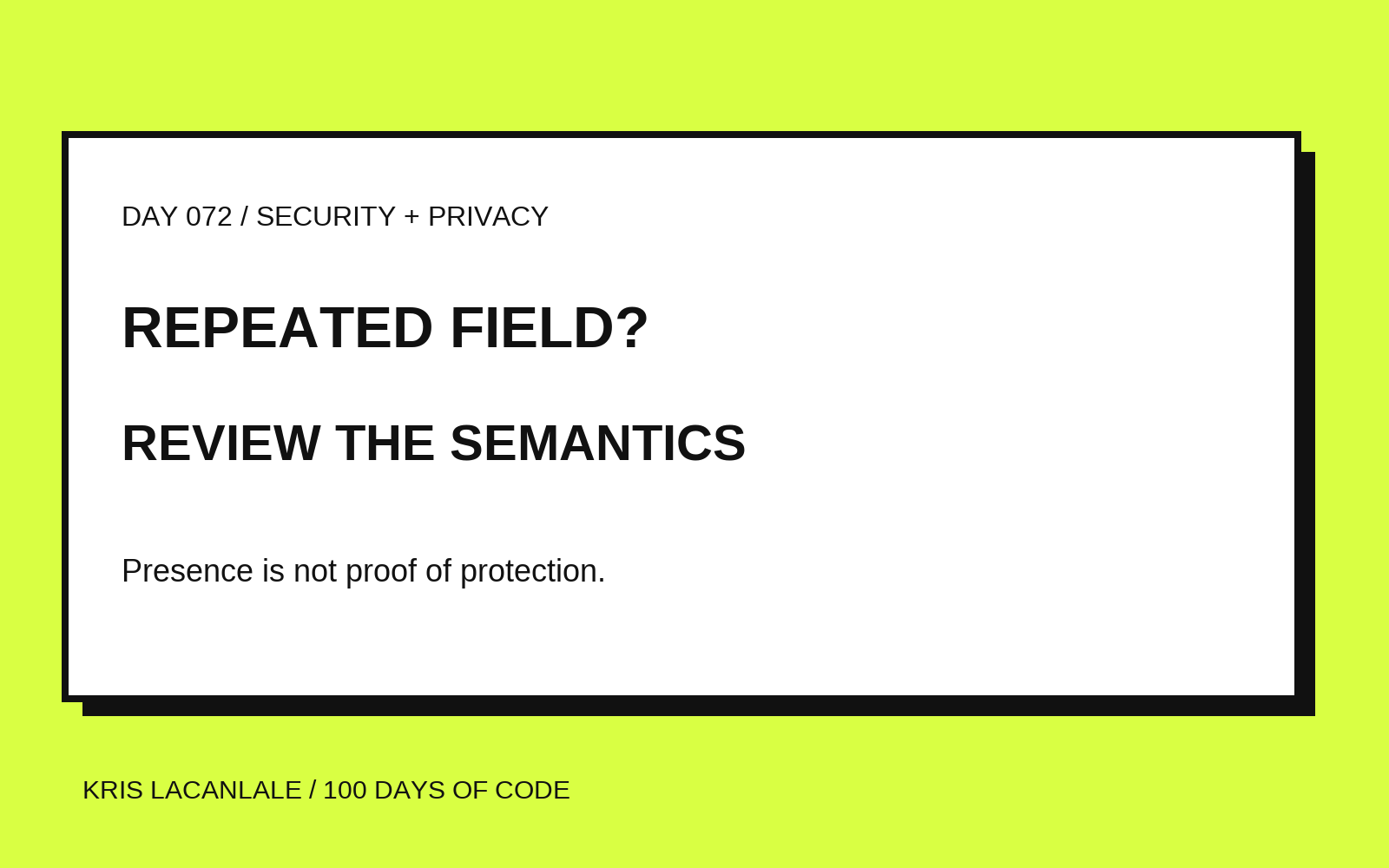
Security Header Explorer project cover
/ Overview

An offline Python CLI that inventories six response headers without printing their raw values or assigning a security score.

NameSecurity Header Explorer

ClientIndependent daily build

IndustriesSecurity education

DateDay 072 · November 12, 2026

/ Challenge

A list of response headers is easy to mistake for proof of security. Reviewers need a compact inventory with visible limits, while unrelated cookies and raw policy values do not need to appear in a shared report.

/ Provided services

Clear thinking.
Practical delivery.

01

Bounded parsing

One response per file, strict header-name syntax and a 64 KiB cap keep the input contract explicit.

02

Minimal reporting

Names, status, counts and explanations appear in JSON; raw header values do not.

03

Manual review boundary

Presence is not proof of effective policy. HTTPS context, CSP directives and repeated-field semantics need separate review.
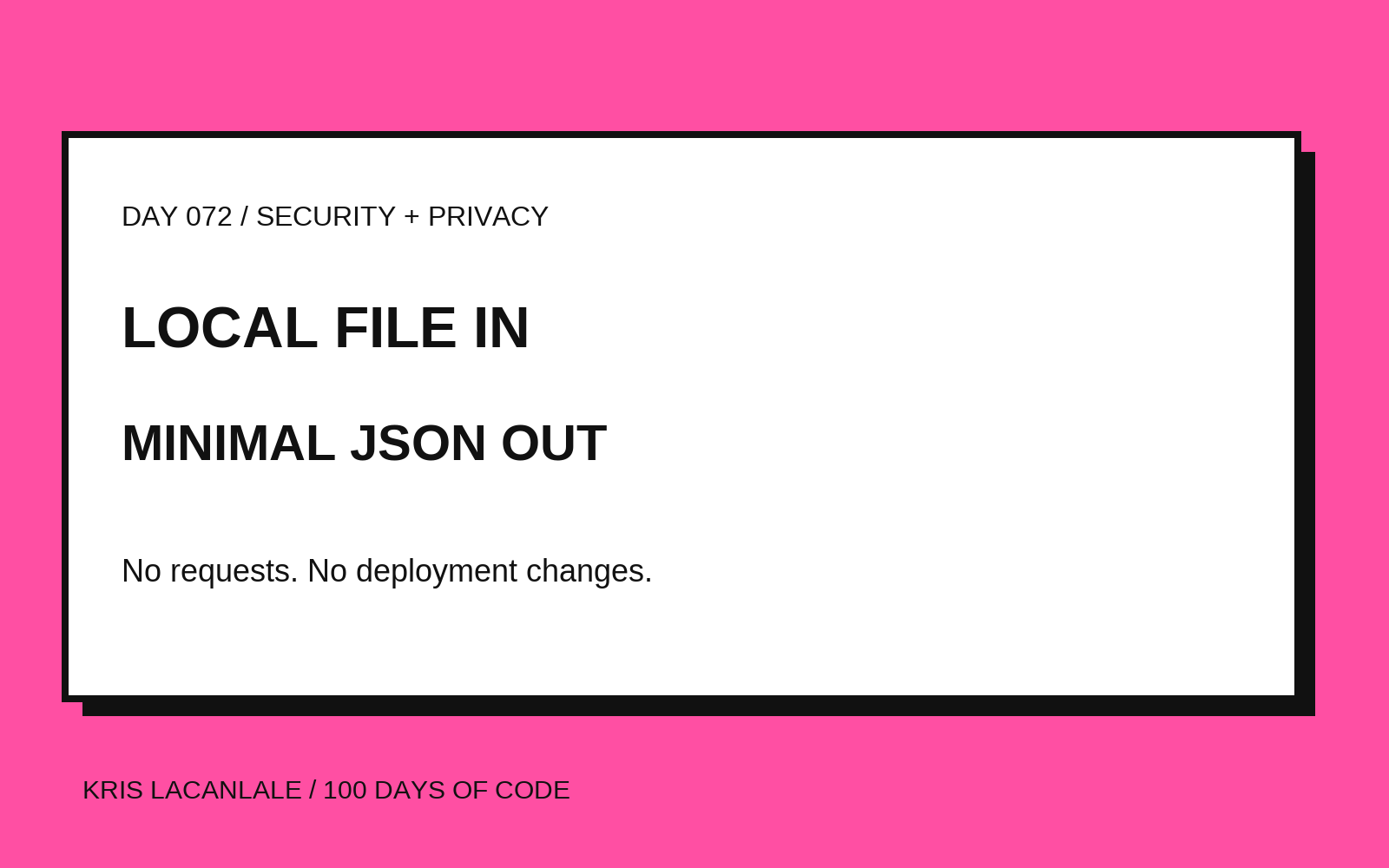
Security Header Explorer feature visual
/ Solution

Security Header Explorer reads one UTF-8 file of Name: value lines, without a status line or body. It normalizes field names, inventories six selected headers, counts occurrences and flags repeated fields and unexpected X-Content-Type-Options values. Input is capped at 64 KiB. Folded fields and malformed lines are rejected. JSON output omits raw values and unrelated headers. The tool performs no network requests, policy effectiveness analysis or deployment changes.

/ Impact

Offline header inventory

Six selected response fields

Missing and empty distinctions

Repeated-field review notes

Thirteen passing tests

/ Tech stack

Python standard library

Argparse, pathlib, regex and JSON provide a dependency-free CLI.

Thirteen tests

Tests cover casing, duplicate fields, missing and empty values, malformed input, bounds and omission of raw values.

Next project

Password Entropy Lens

View case study ↗