The problem: a running container cannot complete its task
A container can be running while the service inside is preparing data, waiting for a dependency or failing the workflow people need. A green badge can therefore answer a much narrower question than the operator assumes.
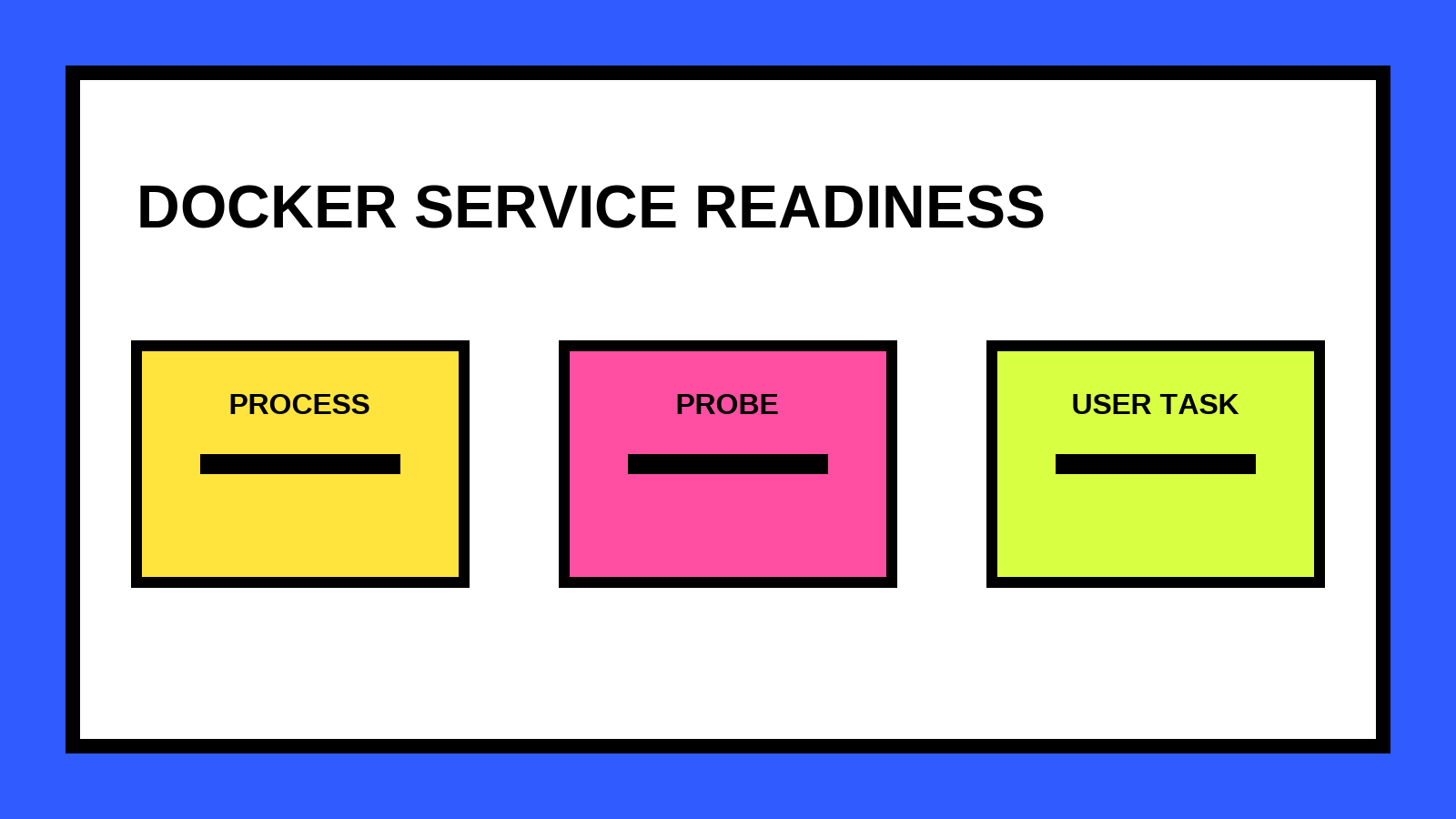
The useful readiness question is concrete: what observation demonstrates that this service can do its job through its intended access path? A process existing, a probe passing and a user task succeeding are different observations.
The concern: a dashboard can hide incomplete recovery
If startup is treated as readiness, dependent services may begin too early and a deployment can be called complete before its application works. A basic success endpoint might miss a failed database connection or unavailable storage.
Define the promise behind each indicator. A health check is only evidence for its configured probe; it is not a certificate for the entire service or a guarantee that dependencies will remain available.
Where it applies: small Docker stacks and their users
Use this review for a Compose stack, a dependency-sensitive service or a post-deployment handoff. Its scope includes the person reading the dashboard as well as the application waiting on another component.
- Container startup: confirms the process has begun, not the whole workflow.
- Dependency coordination: decides when a dependent service may start.
- Periodic probe: tests a deliberately bounded condition.
- Smoke check: exercises a representative task through the intended route.
- Operator response: identifies who investigates and what a failed signal means.
Example scenario: the notes app cannot save
In a fictional notes application, the container starts and answers a basic HTTP request, but saving fails because database access is unavailable. The HTTP probe did not promise to test a write, so its passing result does not contradict the failed workflow.
The review should separate those signals and investigate the database path. This is a test-design example, not a reported outage or a claim about a client system.
Resolution: define checks for separate promises
Docker documents that Compose normally waits for a container to run rather than for its application to become ready. A dependency condition of service_healthy can coordinate startup using its configured health check. That coordination does not replace application retries or recovery after a later dependency failure.
Write down what each probe tests, its startup allowance and what failure should prompt someone to investigate. Confirm the required utility exists in the actual image and keep secret values out of logs and examples.
After deployment, use a safe, authorized smoke task for the broader workflow. If it writes data, define the test records and cleanup first. A frequent read-only probe and a controlled workflow test can cover different needs without making every health check invasive.
Recommendations: make each status explain itself
My recommendation is to keep the readiness note beside the deployment definition. The next maintainer should not have to infer the meaning of healthy from a colour.
- Name the capability and limitations of every probe.
- Use realistic timeouts and startup allowances, not a guessed long sleep.
- Keep repeatable probes cheap and read-only where practical.
- Record which dependencies can delay startup.
- Choose a representative user-path smoke check.
- Document what happens when a dependency fails later and who responds.
Conclusion: readiness is a defined capability
The goal is an honest signal that supports a decision. Start with one service, describe what each check establishes and preserve what remains untested.
Review that definition after configuration changes. Explore the reliability projects or discuss a deployment workflow when the operating boundary is unclear. Docker primary documentation reviewed November 19, 2026.