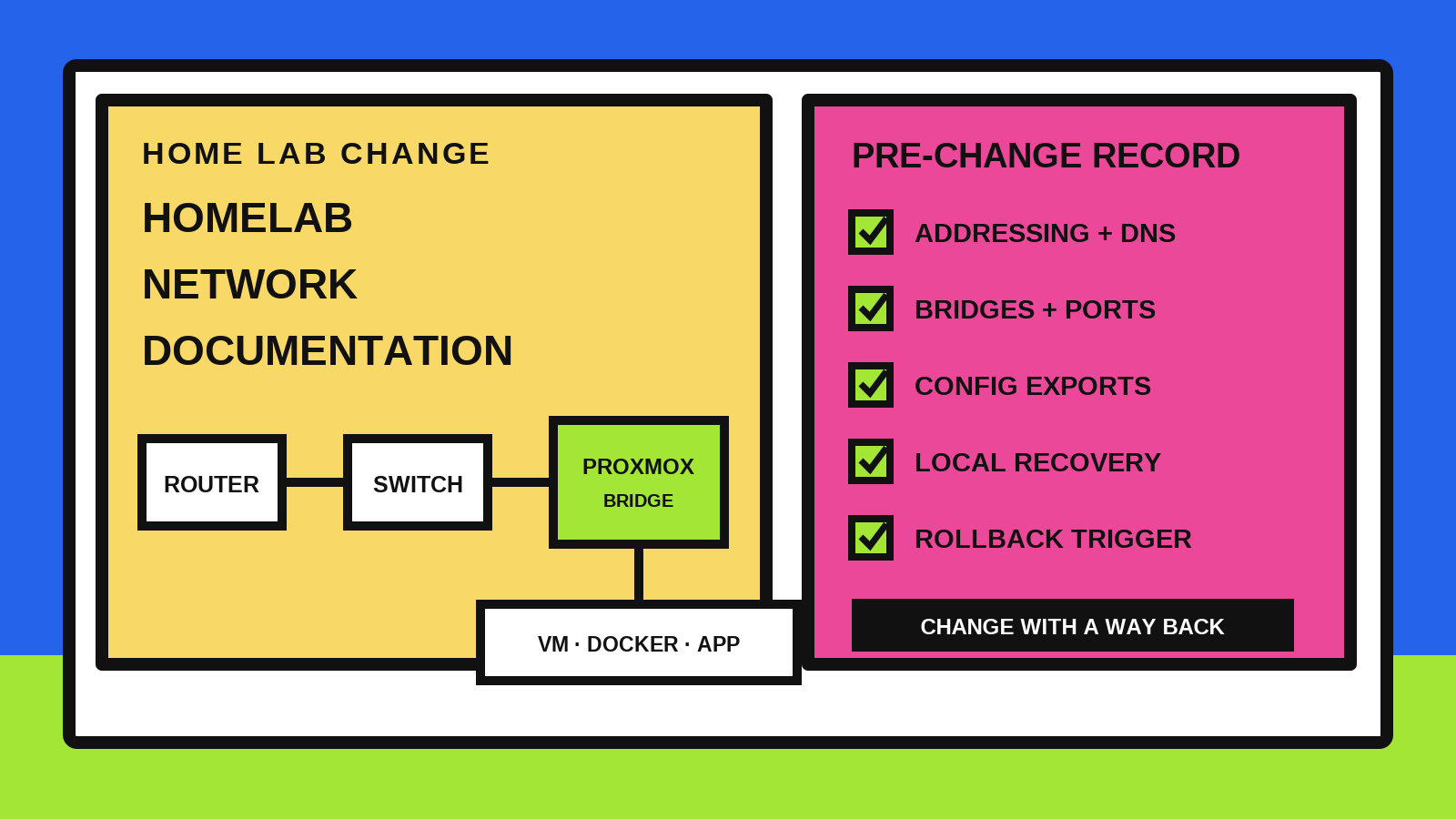
The problem: a network edit breaks an unseen dependency
Changing a subnet, bridge, VLAN or DNS record can affect more than the device being edited. A guest can have the expected address but sit on the wrong network path; a remote route can still point to the range that was just replaced.
The documentation should preserve how traffic reaches one important service before you change it. A small verified map is more useful than a detailed diagram built from memory.
The concern: recovery can depend on the path being changed
A network change becomes harder to reverse when the only management connection uses the same route or name that no longer works. Configuration exports also help only when you know where they are and how the relevant device restores them.
Record the current state separately from the intended state. Confirm an authorized local or independent management path before the window. Keep secrets in their approved store rather than copying them into a diagram or shared change note.
Where it applies: the path from client to service
This record is useful before changing a home router, lab address range, virtual bridge, container binding or remote-access route. Include only the boundaries affected by the proposed edit.
- Router and switch: gateway, relevant uplink, VLAN and management path.
- Addressing: prefix, DHCP range, reservations and static addresses.
- DNS: resolver, important records and expected answers.
- Virtualization: node, guest, bridge and applicable network tag.
- Containers: service, container port, host address and published port.
- Remote access: routed prefix, authorized access rules and recovery method.
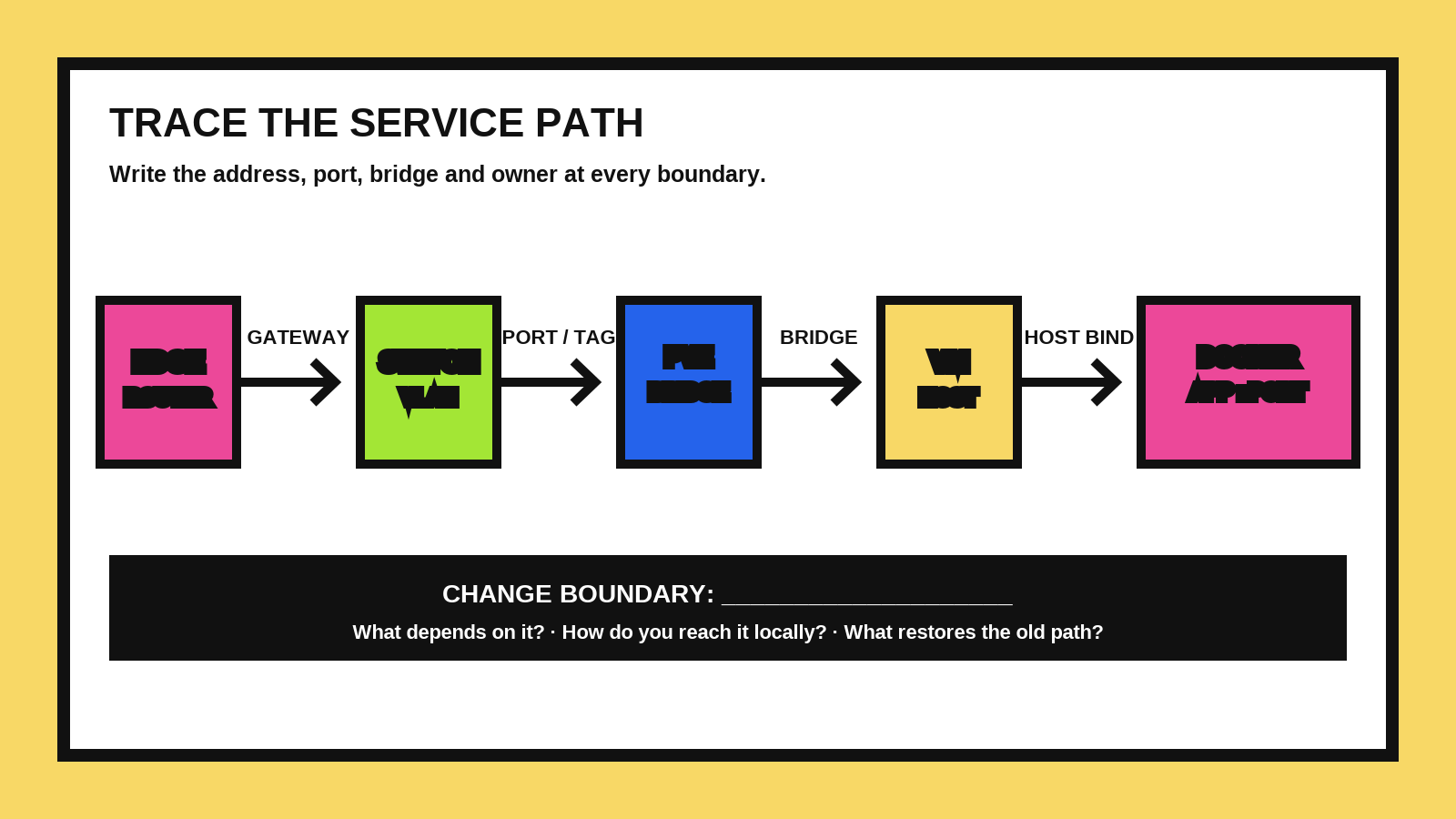
Example scenario: a service moves to a new subnet
Imagine a fictional lab moving a VM to a different private range. The operator changes the guest address but overlooks the DNS record and the remote route. Local access by the new address works while remote access by name fails.
The record should distinguish the guest's state, the name resolution result and the route used by the remote client. That evidence narrows the investigation without assuming that the application itself failed. The example is not an incident claimed in a client or portfolio system.
Resolution: capture a baseline and validate each boundary
Trace the intended client path to the service. Record the current addressing, relevant guest network settings and ingress mapping. Use each product's supported configuration export process for devices you will change, and confirm the recovery procedure before editing.
For a Docker bridge-network service, the published host binding is part of that path. Docker documents that publishing without a specific host address can expose the port on all host addresses. Record what is actually configured rather than assuming a container port means the same thing as its external endpoint.
Make one bounded edit at a time and check the affected path. If management or an expected service check fails, follow the written stop condition and recovery plan. Test from the actual local and remote client paths, not only from the server.
Recommendations: keep a before-and-after change record
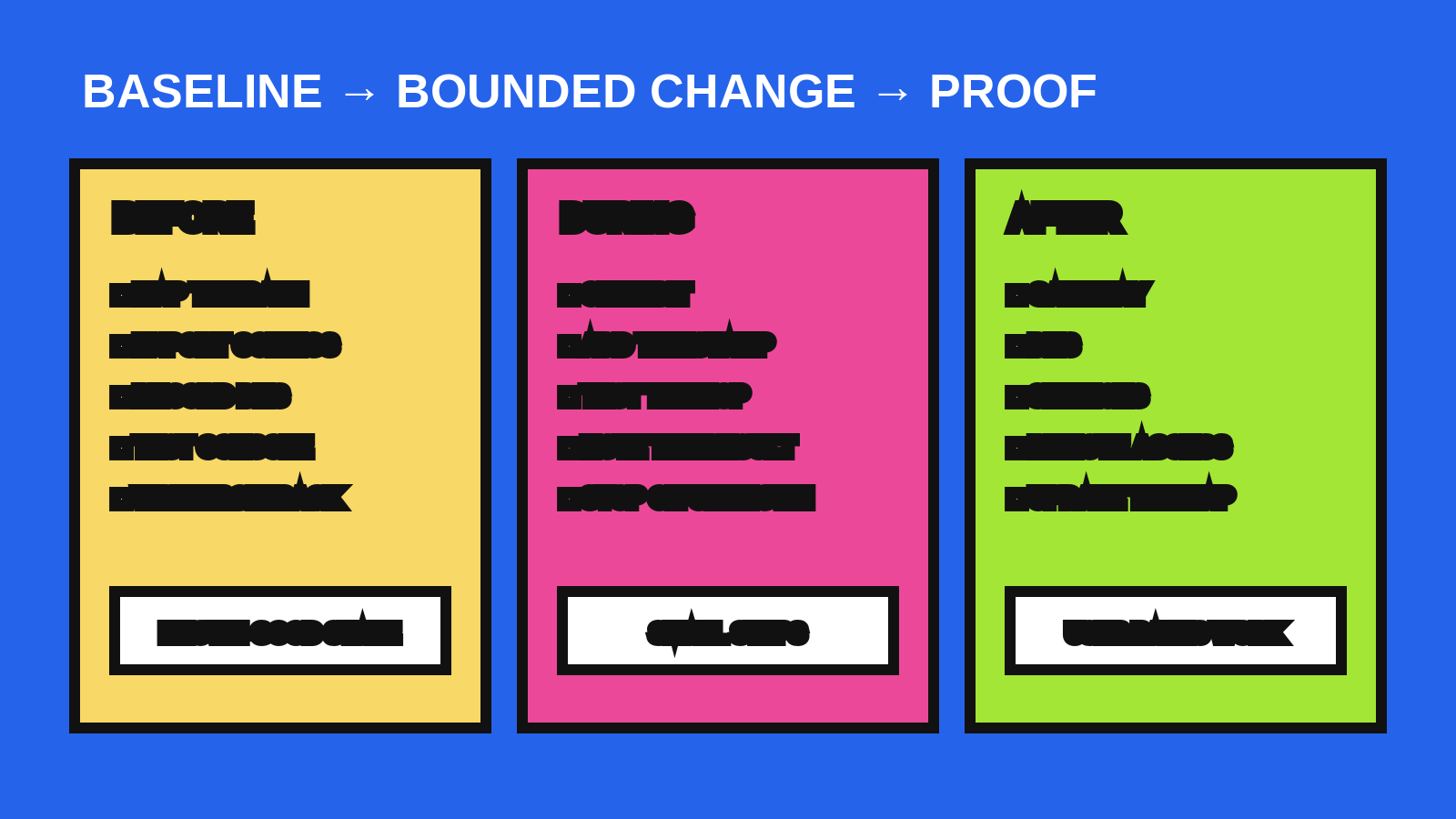
My recommendation is one compact record linked to the relevant secure exports. It should be usable while the application and normal network route are unavailable.
- Before: describe the edit, affected services, baseline checks and owner.
- Access: confirm the independent management route and time available to recover.
- Recovery: name the saved configuration, supported restore method and rollback trigger.
- During: timestamp the actual edits and stop on unexplained results.
- After: verify gateway, DNS, management and application access from intended clients.
- Closeout: update the map, remove approved temporary rules and record unresolved issues.
Conclusion: documentation is part of the recovery path
The goal is enough verified context to predict the affected area and restore a known-good connection. You do not need a perfect enterprise map to document one important service honestly.
Start with the next network change, preserve its baseline and keep the record current after validation. For help reviewing a lab dependency path, explore the infrastructure projects or discuss a specific workflow. Docker primary network guidance reviewed November 18, 2026.