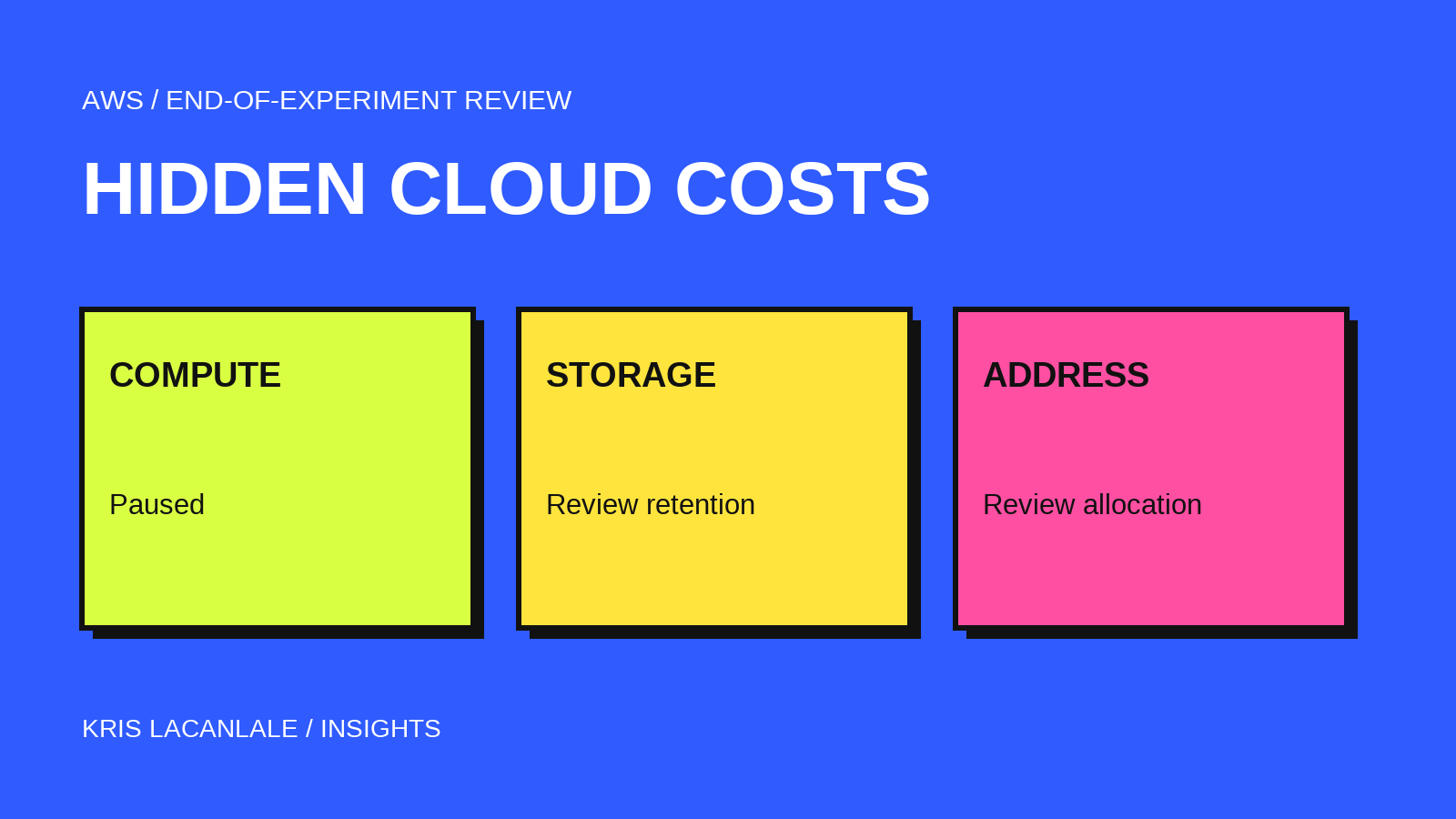
The problem: the server stops, the bill does not
You finish a cloud demo, stop the server and assume the spending has stopped too. Later, the bill still shows usage. The missing step is reviewing the resources around the instance rather than treating one status badge as the state of the entire project.
Here, “hidden” means easy to overlook during cleanup—not a secret fee. This article focuses on AWS EC2 experiments and their retained resources. It does not calculate a bill or cover every cloud provider and pricing model.
The concern: small resources can outlive their purpose
An experiment can end without anyone deciding what happens to its data or network allocation. “Keep it for now” becomes indefinite when there is no owner or review date. The concern affects the person paying for the account as well as anyone who may still need the data.
A resource that looks idle is not automatically disposable. A detached volume may hold a recovery copy, while an allocated address may be referenced by another system. Cost review must establish purpose and dependencies before cleanup.
Where it applies: retained AWS resources
This is relevant to temporary demos, learning labs, paused development servers and retired EC2 projects. Start in the correct AWS account and review every Region used by the project. The scope below separates resources that remain from the stopped compute instance.
- EBS volumes: attached root and data volumes persist when an EBS-backed instance is stopped, and storage remains billable.
- EBS snapshots: recovery copies are separate resources; include their retention and storage costs in the review.
- Elastic IP addresses: an associated allocation can remain when the instance stops and can still generate charges. Do not confuse it with an automatically assigned public address that is released on stop.
- Other services: databases, object storage and network services need their own lifecycle and billing checks. Stopping EC2 does not constitute cleanup for those services.
- Subscriptions and commitments: review any Marketplace subscriptions, Reserved Instances or Savings Plans separately; an instance status change is not evidence that these obligations ended.
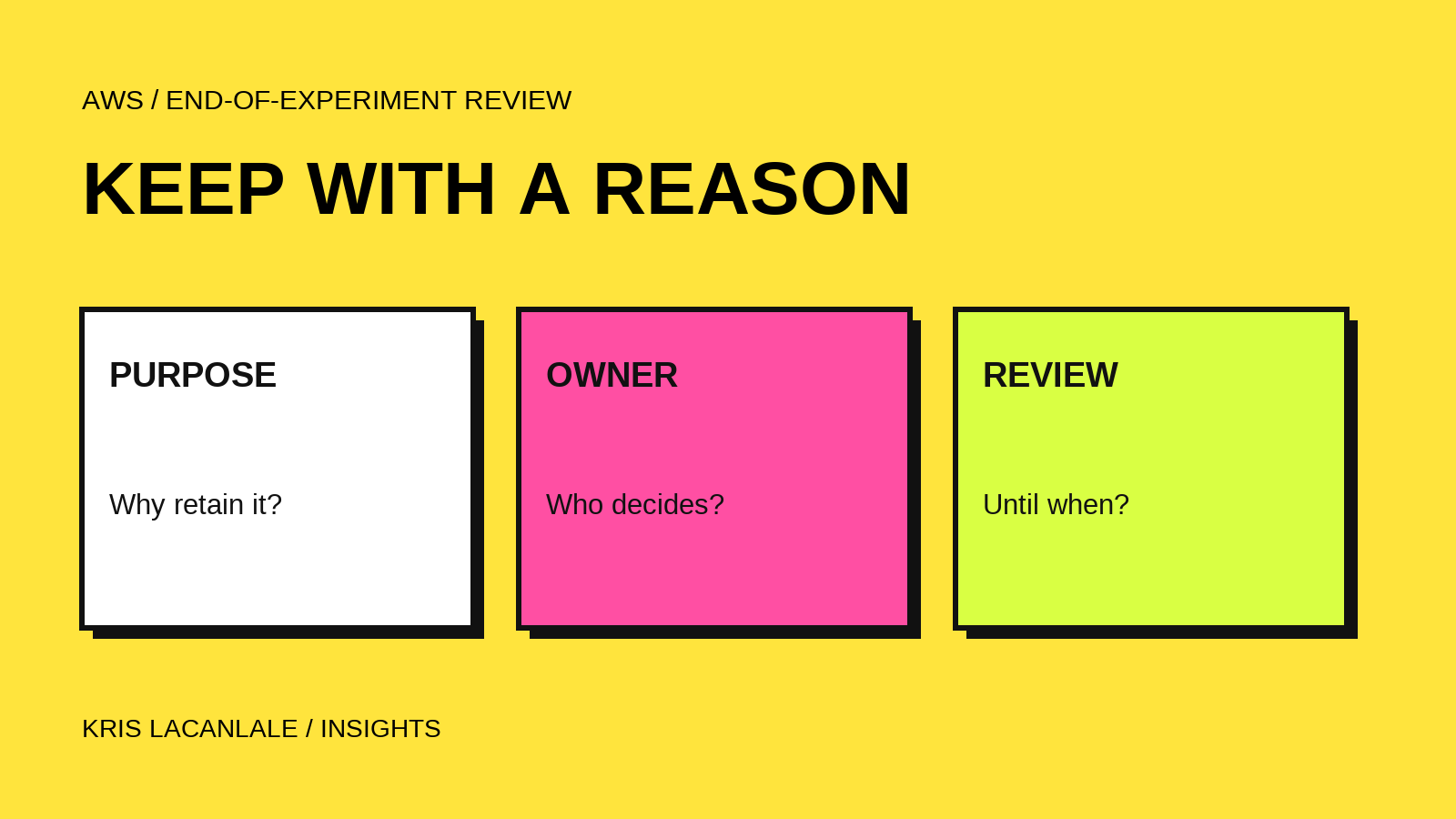
Example scenario: a finished demo with retained data
Imagine a fictional demo with one stopped EBS-backed instance, a data volume, a snapshot and an Elastic IP allocation. The demo is no longer being shown, but nobody recorded whether it will resume. The owner later notices ongoing AWS charges.
The review should identify the actual billed service and usage period, then map it to the retained resources. The volume and snapshot may have a valid recovery purpose; the address may still have a dependency. This example supplies no invented bill, savings figure or customer incident.
The first decision is therefore “what must remain and until when?” rather than “delete everything.” If ownership is unknown, resolve it before making destructive changes.
Resolution: trace the charge, then decide
Read the billing detail by service, Region and usage type. Compare the usage period with the time the instance was stopped. Earlier charges do not disappear when a resource is removed, and a fresh console view is not proof that billing data has caught up.
Inventory the project's resources and give each one an owner, purpose and retention decision. For anything proposed for removal, check dependencies, authorization and the required recovery outcome first. Termination is permanent; the fate of each attached EBS volume depends on its deletion setting. Do not substitute termination for a resource-by-resource review.
After approved cleanup, record what changed and when. Revisit the usage details once reporting has updated. If the charge is still unexplained, investigate the relevant service or contact AWS billing support instead of deleting additional resources by guesswork.
Recommendations: give temporary projects an end condition
My recommendation is to make cleanup ownership part of the project brief. A short decision record is easier to revisit than an informal promise to tidy up later. The objective is justified spending and recoverable data, not simply the smallest resource count.
- Before launch: name the owner, expected lifetime and person responsible for billing review.
- During the project: keep resource identifiers, account and Region in private operational notes; use consistent project labels where supported.
- Before cleanup: confirm whether the project will resume and what data must remain recoverable.
- For retained resources: record purpose, owner and a concrete next review date.
- For removal: approve specific actions, check dependencies and account for any service that manages or recreates resources.
- After changes: compare subsequent usage with the recorded change time and follow up on anything unexplained.
Conclusion: review the whole project, not one server
A stopped EC2 instance is one lifecycle state, not a guarantee of zero project cost. Storage, recovery copies, addresses and separately billed services need their own decisions. Knowing why a resource remains is as important as knowing that it exists.
For your next temporary cloud project, write down its end condition before launch. Explore the portfolio for documented builds, or bring the project's expected lifetime and recovery needs into a planning conversation. AWS primary references reviewed November 18, 2026.