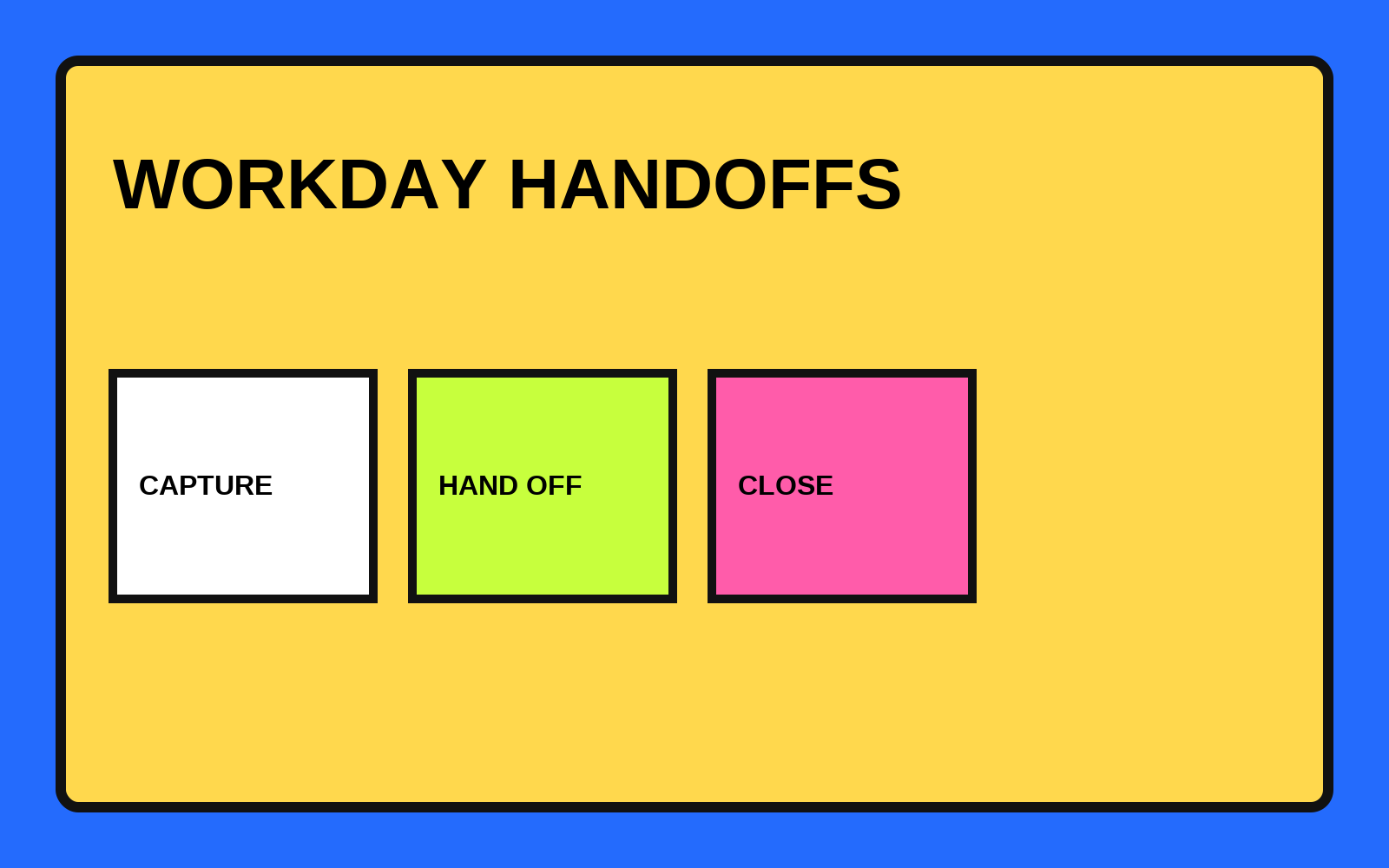
The problem: unfinished work has no clear next step
Closing a laptop can leave a task technically open and operationally unclear. The next person may not know what is true, what can proceed or whether the author expects a reply outside working hours.
A workday handoff should leave enough context for a teammate or tomorrow's you to continue. It does not require an empty inbox or a completed task list.
The concern: urgency and availability become ambiguous
A routine update, an answer needed by a blocked teammate and an incident are different kinds of communication. Putting them into one vague status message can make every unfinished task sound urgent.
An unaccepted handoff also leaves ownership unresolved. “Someone should monitor this” does not establish who will respond. Use the team's actual availability and escalation agreement, especially for on-call work.
Where it applies: ordinary work, reviews and live operations
This format suits work-from-home and distributed-team stopping points. Adapt it to the responsibility you actually hold rather than treating one routine as universal.
- Personal continuation: preserve the next action and dependency for the next work period.
- Review handoff: link the item and identify what remains unchecked.
- Blocked teammate: name the decision owner and useful response window.
- Scheduled job or deployment: arrange an owner who explicitly accepts the responsibility.
- Incident: follow the established escalation route rather than relying on a routine status update.
Example scenario: validation is implemented but not reviewed
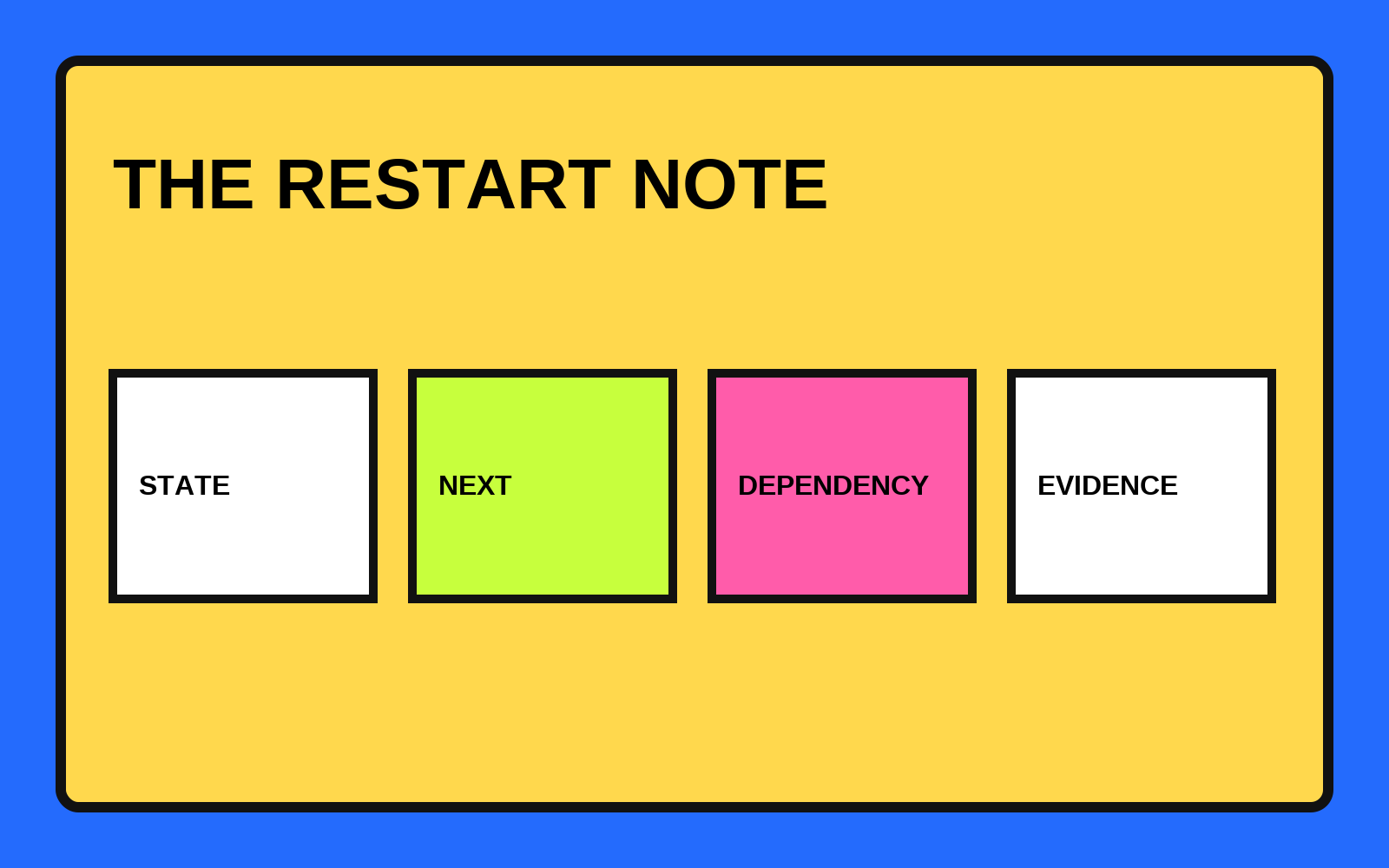
In a fictional development task, form validation is implemented but keyboard review is still pending. A useful restart note says: “Next: test focus after a failed submission. Waiting on: confirmation of required fields. Evidence: linked review PR.”
The author then states their next working date and timezone, and whether a response is needed before then. The note does not call the feature delivered or silently transfer approval to whoever reads it.
Resolution: record the continuation and agree the handoff
Choose the active item most likely to create confusion. Record its current state, next concrete action, dependency and evidence link. Keep the authoritative detail in the existing task rather than copying a full conversation.
If another person needs to act, confirm the owner and response window. For routine work, state what can continue without you and when you expect to return. Use a date and timezone when “tomorrow morning” could be interpreted differently.
Check for genuine operational responsibility before closing. Arrange accepted coverage where required, then update the availability signal the team already uses. Do not promise responses outside the agreement simply to make the message reassuring.
Recommendations: keep the routine brief
My recommendation is one restart note and one honest availability signal. Remove duplicated fields if the routine becomes another reporting job.
A closing routine also does not replace breaks during the workday. OSHA's workstation guidance discusses task variation and short pauses; that is a separate consideration from organizing the handoff.
- State what is complete and what remains untested.
- Link the source record and avoid unnecessary private details.
- Separate routine updates, decisions and incident escalation.
- Confirm acceptance before transferring operational ownership.
- Check the next day whether the note actually helped you resume.
Conclusion: leave context without creating always-on work
A good workday handoff lets the next person continue without guessing while making availability clear. Its value comes from context and accepted ownership, not from the length of the update.
Try it on one unfinished task and keep the parts that help the next work period. Explore related projects or discuss the handoff inside your software workflow. OSHA primary work-process guidance reviewed November 19, 2026.